





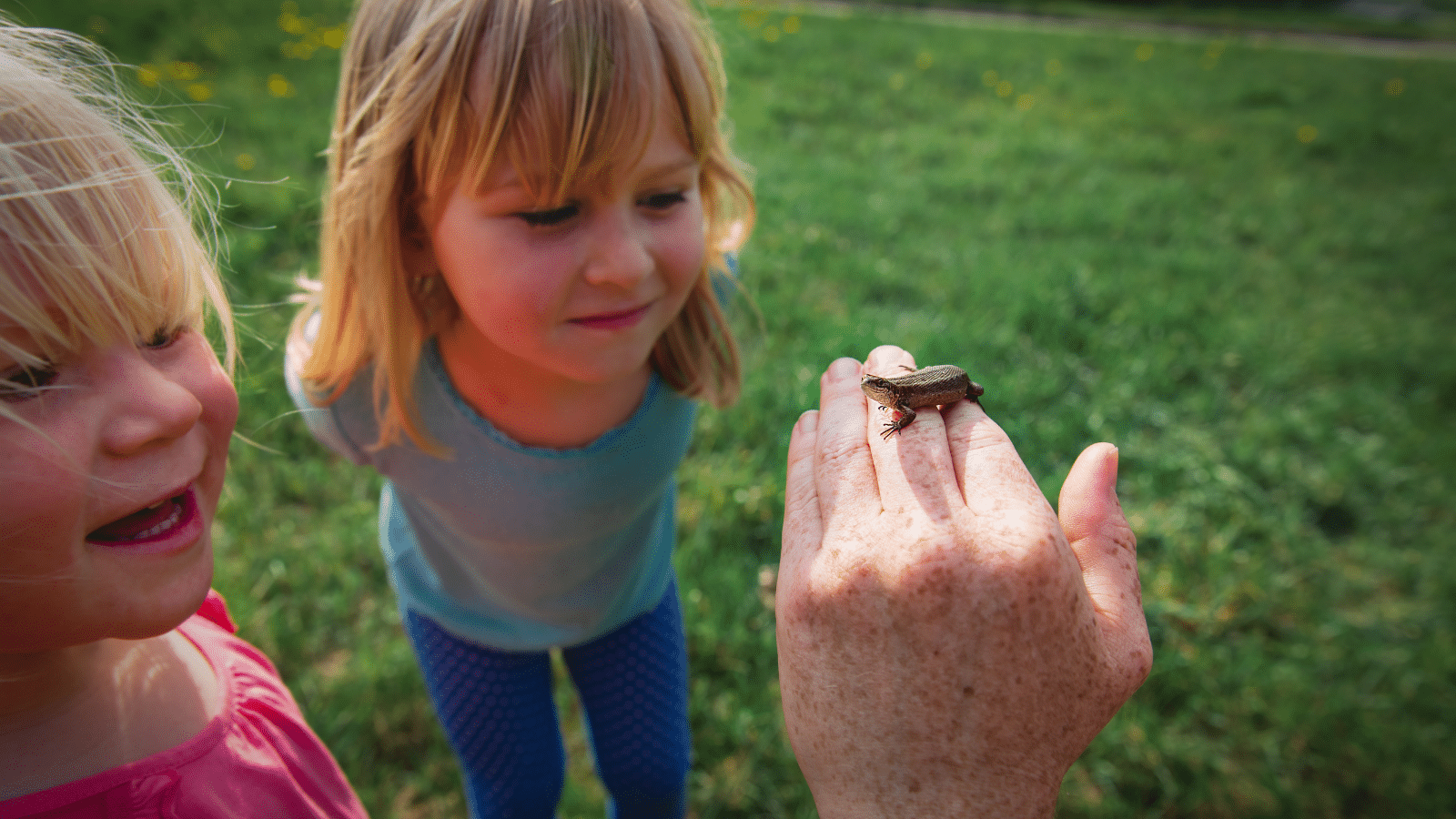
Preschool Science at Home: How to Encourage Curiosity and Wonder
Why does the moon change shape? Where do birds go when it rains? Why do leaves change color? What makes a shadow? How does a seed become a plant?
If you have a preschooler, you’ve probably heard questions like these—or plenty of others.
Preschoolers are naturally curious about the world around them. They want to touch, observe, ask questions, and discover how things work. That makes the preschool years a wonderful time to begin exploring science together.
But preschool science doesn’t need to look like school.
At this age, the goal isn’t to memorize scientific vocabulary or complete pages of worksheets. It’s to nurture your child’s natural curiosity, encourage observation and questions, and help them discover the wonder of God’s creation.
Whether you’re homeschooling preschool or simply looking for ways to explore science with your young child, you can make science a natural part of everyday life.
What Does Science Look Like for Preschoolers?
Science for preschoolers can be wonderfully simple.
It might look like:
- Watching ants carry food across the sidewalk
- Planting a seed and checking on it each day
- Looking for different kinds of leaves
- Watching clouds move across the sky
- Exploring what sinks and what floats
- Observing insects in the backyard
- Comparing rocks, sticks, or shells
- Noticing how shadows change
- Talking about the weather
- Asking questions about animals
- Exploring how water moves
- Looking closely at something with a magnifying glass
You don’t need an elaborate science experiment every day.
Instead, look for opportunities to notice, wonder, ask, explore, and discover.
When your child asks, “Why?” resist the urge to immediately provide the answer. Ask another question:
“What do you think?”
“What do you notice?”
“What could we do to find out?”
These simple questions help preschoolers begin thinking like scientists.
Should You Teach Science in Preschool?
You don’t need to formally teach every science concept to your preschooler. In fact, preschool is a wonderful time to prioritize exploration over formal instruction.
Your child is already learning about science as they play and interact with the world.
They’re learning about:
- Cause and effect
- Living things
- Weather
- Plants
- Animals
- Motion
- Light and shadows
- Water
- Sound
- Size, shape, and texture
The goal of preschool science is to help your child become more aware of these things and develop a desire to keep asking questions.
For a homeschool family, science can be woven naturally into your day rather than confined to a particular hour on a particular day.
10 Simple Preschool Science Activities
You don’t need expensive supplies to explore science with your preschooler. Start with what you already have around you.
1. Go on a Nature Walk
Take a walk around your neighborhood, backyard, or local park.
Ask your child to find:
- Three different leaves
- Something smooth
- Something rough
- Something that moves
- Something that is alive
- Something that is not alive
Talk about what your child notices.
2. Plant a Seed
Plant a seed in a clear container so your child can observe what happens.
Check it together each day and talk about what you see changing.
What happened first? What happened next? What does the plant need?
3. Explore Shadows
Take a flashlight into a dim room and experiment with shadows.
Move an object closer to the light and then farther away. What happens to the shadow?
You can also observe shadows outside at different times of day.
4. Try a Sink-or-Float Experiment
Fill a container with water and gather several household objects.
Before placing each object in the water, ask:
“Do you think it will sink or float?”
Then test your prediction.
5. Watch the Weather
Make weather observations together.
Is it sunny, cloudy, rainy, windy, or cool?
Look outside and ask your child to describe what they see.
6. Observe an Insect
If you find an ant, caterpillar, butterfly, or other insect, take a few minutes to observe it.
Where is it going? How does it move? What does it look like?
Encourage your child to observe without disturbing it.
7. Explore Textures
Gather objects with different textures.
Compare things that are:
- Smooth and rough
- Soft and hard
- Heavy and light
- Warm and cool
Let your child describe what they feel.
8. Investigate Water
Give your child cups, containers, spoons, and water and let them explore.
What happens when you pour water into a tall container? What happens when you pour it into a wide container?
Simple play can lead to meaningful scientific observations.
9. Look at the Sky
Spend a few minutes looking at the sky.
What shapes do you see in the clouds? Are they moving? Is the moon visible?
You don’t need to turn every observation into a formal lesson.
Sometimes simply noticing is enough.
10. Ask “Why?” “How?” and “Wow!”
Perhaps the most important science activity is simply encouraging your child to keep asking questions.
Why does that happen?
How does that work?
Wow—look at that!
Curiosity is a wonderful place to begin.
How to Choose a Preschool Science Curriculum
While you can explore science without a curriculum, a good preschool science curriculum can give you ideas, structure, and a starting point when you’re not sure what to do next.
When choosing a preschool science curriculum, look for one that:
Encourages Curiosity
Preschoolers should have opportunities to ask questions, make observations, and explore—not simply memorize facts.
Uses Age-Appropriate Activities
Activities should match your child’s developmental stage and use materials that are easy for families to find and use.
Fits Your Family’s Schedule
Preschoolers don’t always cooperate with a carefully planned schedule. A flexible curriculum can help you take advantage of those moments when your child is naturally interested in exploring.
Involves Parents
At this age, science is often most meaningful when you experience it together. Look for a curriculum that helps you know what questions to ask and how to encourage your child’s thinking.
Connects Science to the Real World
The best preschool science curriculum gives children opportunities to see science happening all around them—not just on a worksheet.
Builds Wonder
Most importantly, preschool science should help children become curious about the world around them.
Exploring God’s Creation Through Preschool Science
For Christian families, science is also an opportunity to help children recognize the wisdom, creativity, and beauty of their Creator.
A preschooler may not understand complex scientific concepts yet, but they can marvel at a butterfly’s wings, watch a seed grow, or look at the stars and recognize that the world is full of amazing things.
These everyday moments can become opportunities to point your child’s attention toward God.
You might say:
“Look at how beautifully God made that butterfly.”
“God made so many different kinds of plants. What do you notice about this one?”
“Isn’t it amazing that God made the moon and stars?”
Science becomes more than learning about how the world works. It becomes an opportunity to cultivate wonder and worship.
Preschool Science: Exploring Creation Together
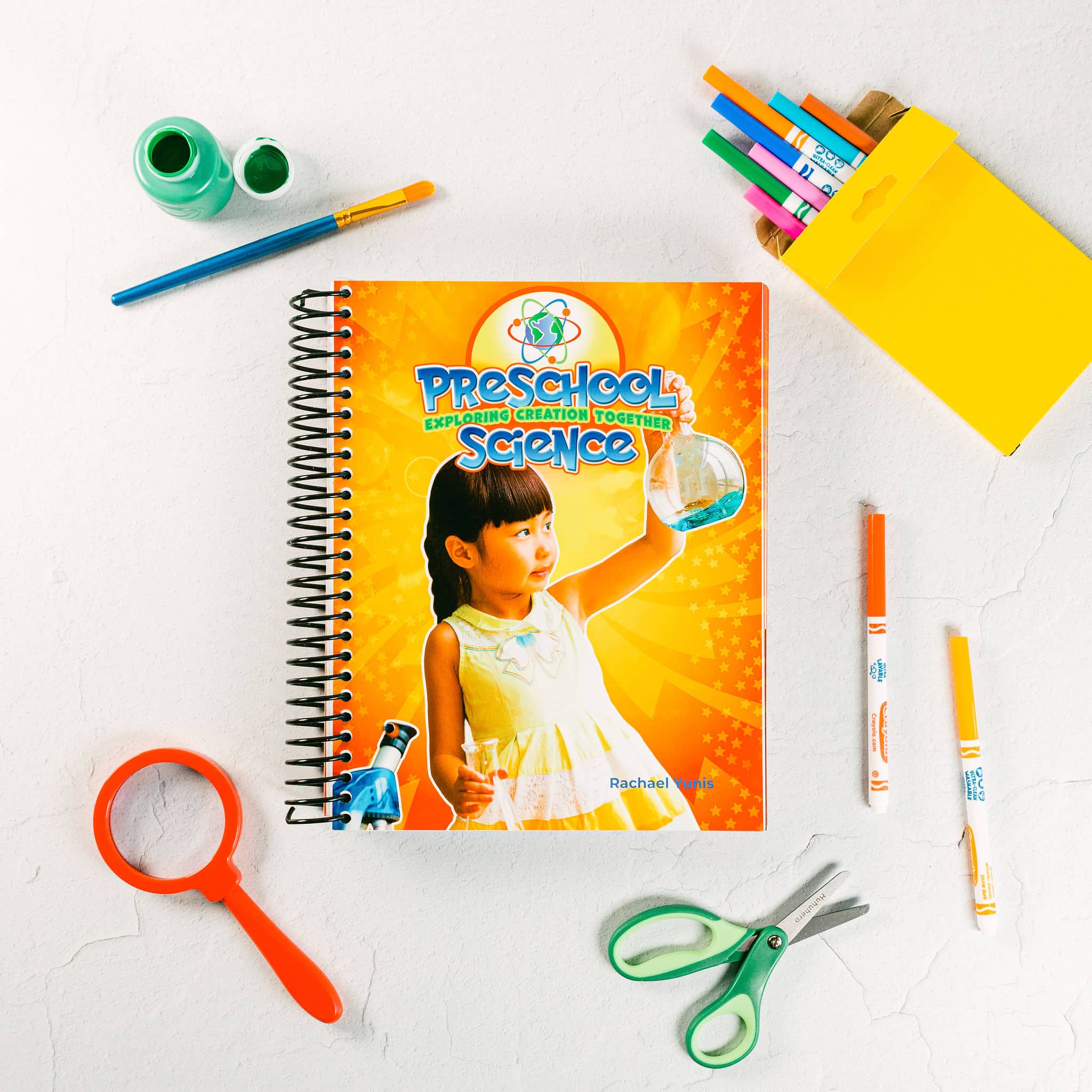
If you’re looking for a Christian preschool science curriculum, Apologia’s Preschool Science: Exploring Creation Together is designed to help parents and preschoolers explore the world around them through stories, conversation, and hands-on activities.
The curriculum is recommended for PreK through Kindergarten and focuses on exposure and wonder rather than asking young children to memorize scientific facts.
A Story-Based Approach
The first half of the book is written in a conversational story format that parents can read aloud with their children.
As you read, questions encourage your preschooler to participate and think about what you’re discovering together.
The goal isn’t simply to get through a lesson. If your child is engaged and wants to keep reading, keep reading. If an activity opportunity presents itself, stop and explore.
Hands-On Science Activities
The parent guide includes age-appropriate activities that demonstrate and reinforce the concepts introduced in the stories.
There are two types of activities:
Hands-on activities allow children to explore individual science concepts more deeply.
Project activities help children create a larger, ongoing project as they learn.
The activities are designed to make science something your child can experience rather than simply hear about.
Flexible Preschool Science Lessons
One of the unique features of Preschool Science: Exploring Creation Together is that there is no set schedule.
Instead, the curriculum encourages parents to:
- Watch for opportunities to mentor in the moment.
- Use open-ended questions.
- Encourage children to think aloud.
That means you can use the curriculum in a way that fits your family’s actual life.
You might explore a science concept while playing in the backyard, during a trip to the grocery store, on vacation, or while taking a walk.
Science doesn’t have to wait until “school time.”
Designed for Exposure and Wonder
Preschool science isn’t about getting your child an early start on memorizing facts.
It’s about developing awareness and interest in the science happening all around them.
Preschool Science: Exploring Creation Together was specifically designed with that philosophy in mind. The curriculum encourages children to explore, ask questions, and develop a sense of wonder about God’s creation.
What Is Included in Apologia Preschool Science?
Preschool Science: Exploring Creation Together includes:
- A conversational, story-based student text
- A parent guide
- Hands-on activities
- Project activities
- Colorful photographs and illustrations
- Open-ended opportunities for exploration
- A flexible approach without a required daily schedule
The result is a science curriculum that gives parents a place to begin without making preschool feel overly academic.
Is Preschool Science Right for Your Family?
Apologia’s preschool science curriculum may be a good fit if you’re looking for:
- A Christian preschool science curriculum
- Hands-on learning
- Story-based science
- Read-aloud learning
- Flexible lessons
- Activities that can be done at home
- Opportunities to explore science together
- A curriculum focused on curiosity and wonder
- A gentle introduction to science for preschoolers
It may not be the right fit if you’re looking for a highly structured, worksheet-heavy program or a curriculum focused primarily on memorizing science facts.
For preschoolers, the goal is different.
Explore. Ask. Wonder. Discover.
Make Science Part of Everyday Life
You don’t need to create a perfect preschool homeschool schedule to give your child meaningful opportunities to learn science.
Look for the moments that are already happening.
A spider builds a web.
A bird finds a worm.
A thunderstorm rolls in.
A flower blooms.
A puddle disappears.
A seed begins to grow.
A child asks, “Why?”
These moments are invitations to slow down and explore.
You don’t have to know every answer, either. Sometimes the best response is:
“I don’t know. Let’s find out together.”
That’s the beauty of homeschooling preschool.
You’re not simply teaching your child about the world.
You’re discovering it together.
Start Exploring Science Together
Give your preschooler the opportunity to discover the wonder of God’s creation through stories, questions, and hands-on exploration.
Explore Preschool Science: Exploring Creation Together →
Planning Your Homeschool Year?
If you’re getting ready for your first homeschool year, you don’t have to start with a blank page.
Download Apologia’s FREE Homeschool Planner to help you organize your goals, curriculum, schedule, and more.
Get Your Free Homeschool Planner →
We have been using Apologia science for years with my older kids, and I was so excited to see they now had an option for the littles. I am using this curriculum with two kiddos, one who is in kindergarten and one who is in preschool/jr. Kindergarten and its engaging and accessible for them. The beautiful illustrations and wide range of topics is perfect for this age, and as always, Apologia does a great job of pointing our kids to Christ, the Creator of all things.
– Homeschool Parent
Take a Look Inside Preschool Science
Hear from homeschool mom Katie from Life in the Mundane as she walks through Preschool Science: Exploring Creation Together.