





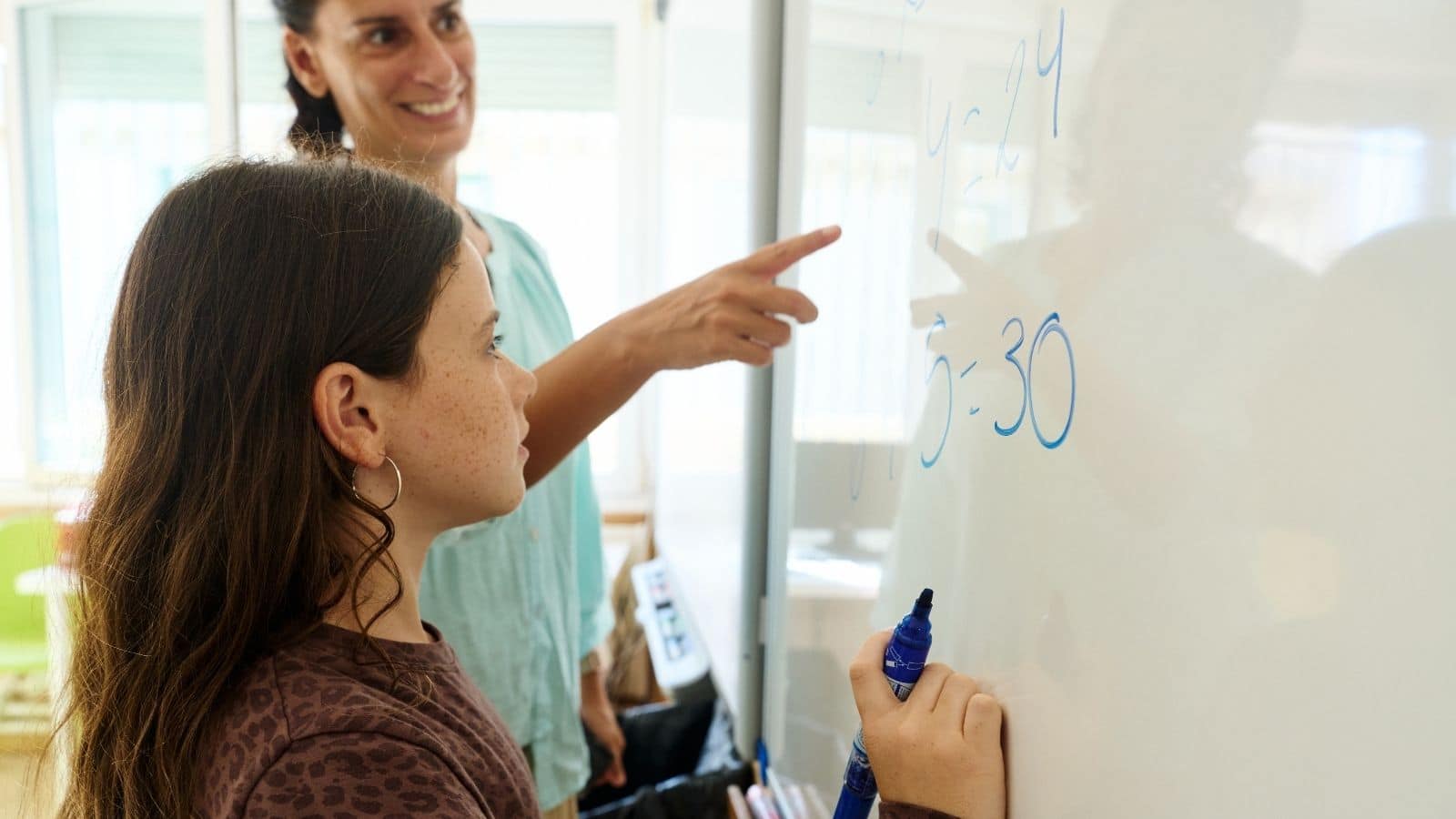
The Homeschool Challenge: Taking It to the Next Level
Welcome to a new conversation about home education—one that unfolds slowly, thoughtfully, and with purpose. Over the next few months, we’ll explore homeschooling by asking good questions and leaning into meaningful answers. This is a five-part series about the why behind home education as much as the how, the heart, the habits, the hope—and yes, the hard parts too.
Homeschooling isn’t just an academic choice; it’s a family decision that shapes your days, your relationships, and your future. In this series, we’ll talk about the who, what, when, where, why, and how of educating at home—an honest conversation with practical advice and counsel. Our goal is to affirm and encourage you in the decision to homeschool, challenge and inspire you to take it to new heights, and celebrate everything that you get to experience along the way in this adventure of a lifetime—one month at a time.
Whether you’re brand new to homeschooling or years into the journey, this series is an invitation to pause, reflect, catch your breath, take it all in, and celebrate the journey. Because home education isn’t just something you do or experience—it’s a lifestyle.
Plan Your Work and Work Your Plan
I want to challenge you to take your homeschool journey to the next level. But not by buying a new curriculum, rearranging the schoolroom (again), or finding the perfect planner or the latest productivity hack. I want to challenge you to start putting some things down in writing.
Educational Philosophy
Homeschooling is too important, too weighty, and too full of eternal consequences to be left to vague intentions and half-formed ideas. If you want to grow, improve, and persevere for the long haul, you need clarity. And clarity often begins with ink on paper. Start by writing down your educational philosophy.
- Why are you homeschooling in the first place?
- What do you believe about children, learning, truth, and the role of parents?
Family’s Goals and Definition of Success
These beliefs already exist in your head and heart, whether you’ve articulated them or not. Putting them in writing forces you to slow down, think deeply, and align your daily practices with your convictions.
Next, write down your family’s goals and definition of success.
- What does a “successful” homeschool graduate look like in your family?
- Is it a transcript filled with advanced coursework?
- Is it a young adult who loves God, loves learning, and knows how to think clearly?
- Is it strong character, healthy relationships, and a readiness to serve others?
If you don’t define success, the world will happily define it for you.
Family Priorities and Values
Then, write down your family priorities and values.
- Relationships – At the top of that list should be relationships. Homeschooling gives you a daily opportunity to choose people over productivity. Sometimes the most important lesson of the day has nothing to do with math or grammar. There are moments when the best decision is to stop the math lesson and work on the relationship. That may feel counterproductive in the moment, but it’s often the most productive thing you can do. You can always come back to fractions tomorrow. You can’t always undo a pattern of unresolved conflict, bitterness, or emotional distance.
- Reasoning – Teach your children to know the truth that sets people free. Education is not merely the transfer of information; it’s the cultivation of wisdom. Teach your children how to think, how to discern truth from error, and how to apply God’s Word to every area of life.
- Resolve – Ask the big question: What is God calling your kids to do for His glory? Each child is uniquely created, uniquely gifted, and uniquely called. Homeschooling gives you the time and space to help them discover that calling and walk toward it with confidence.
- Rigor – Challenging work builds discipline and perseverance, but rigor should serve the mission, not replace it.
- Relevance – Help your children see what their learning connects to in real life and God’s created world.
- Reading – Read aloud. Read often. Read together. Read great books that shape hearts and minds. And above all,
- Cultivate a reliance on God for the results – You are responsible for obedience, faithfulness, and diligence. God is responsible for the outcomes.
For the Dads – What’s Your Resolve?
Now, Dad, let me speak directly to you. Make sure you are giving your full support and backing. In other words, own your family homeschool. This doesn’t mean you have to do all the teaching or lesson planning. But it does mean you take responsibility. You lead, pray, encourage, and protect the time and space needed for homeschooling to flourish. Your possible roles are many: protector, administrator, leader, disciple-maker, and teacher. You may wear different hats in different seasons, but your presence and engagement matter more than you realize. I know you want to be a great dad. So, generate a list of what you resolve to do as a father. Put it in writing, start the journey, leave a legacy, and be challenged.
Work Your Plan and Meet Resistance
“A man plans his ways, but the LORD determines his steps.” – Proverbs 16:9
I’m a big planner. My wife shares my affinity for planning. We like making lists, designing schedules, and then putting our noses to the grindstone. We set stretch goals for the year, priorities for each quarter, big rocks for the month, a main focus for each week, and good habits for every day.
Homeschooling is one of the biggest projects you will ever undertake. It requires long-term planning for the years ahead, weekly planning for the near future, and daily planning for what to do right now. That’s why I strongly recommend creating a four-year plan before your student enters high school. It defines the target and helps you stay focused on what truly matters.
But let me ask you this: how many homeschool plans work out exactly as expected? Probably none. You plan your work. You work your plan. And then you meet a pesky critter called resistance. You know the story. Mom spends Sunday night planning the week, assignments are written out, the schoolroom is organized, and everything looks good. Then, Monday morning arrives. The kids are slow to get moving, breakfast takes longer than expected, chores spark complaints, a younger child wanders off, a sibling argument erupts over seating on the couch during reading time, nap time drags on, and afternoon lessons fall apart. By evening, there are unfinished assignments and an exhausted mom left wondering what went wrong and what she can do better tomorrow.
Here’s my suggestion: keep planning your work, keep working your plan, and expect resistance. Resistance is not a sign of failure. It’s part of the process. Don’t fight it too hard. It will show up time and time again. Instead, recognize that even on the hardest days, important work is being accomplished—relationship building, responsibility training, character development, and learning to trust God.
Expect Resistance and Persevere Anyway
Former University of Alabama football coach Nick Saban emphasized “the process.” He taught his players not to focus on winning, but on doing each task well in the moment—from the classroom to the weight room to every play on the field. No matter where you are in the school year, you’re probably looking back at your plans from the fall and feeling hesitant about the months ahead. We tend to focus on immediate results: completed assignments, smooth schedules, instant obedience. But I want to encourage you to fall in love with the process, not the results.
Homeschooling works in much the same way. Educate your children at home with all your heart. Give it your best every single day. Do everything in the name of the Lord Jesus, giving thanks to God the Father through Him (Colossians 3:17). Don’t fret and worry that you might be messing up your children.
Ask God for wisdom. Help your children consider these questions: What is God calling me to do? What good works has He prepared in advance for me to do? (Ephesians 2:10)
Then, after you’ve walked by faith—after the books have been read aloud, the meals shared, the conversations lingered over, the trails hiked, the games played, and the Deuteronomy 6 moments lived—leave the results to God.
The LORD is good. His love endures forever, and His faithfulness to all generations. –Psalm 100:5
Question and Response
What kind of resistance did you meet this week?
Whatever it is, I believe you’re up to the challenge. Persevere. Don’t give up. Make adjustments. Keep improving. And take your homeschool journey to the next level.