




Teaching with Wonder: How to Teach Homeschool Science with Curiosity
There’s a moment every homeschool mom knows well—you’re standing in the kitchen, or at the beach, or somewhere completely ordinary, and suddenly your child asks a question you can’t answer. And for a split second, your stomach drops. Am I doing this right? Am I enough?
I had the joy of chatting with Sherri Seligson recently — a marine biologist who left her career at Walt Disney World’s Living Seas pavilion at Epcot to raise and homeschool her four children. She’s now the author of Apologia’s Exploring Creation with General Science and Exploring Creation with Marine Biology courses and the face behind most of our middle and high school video instruction. She is, in every sense of the word, an expert, and even she will tell you: you don’t have to know everything to teach your children well.
From the Aquarium to the Kitchen Table
Sherri’s journey from professional marine biologist to homeschool mom gave her a front-row seat to something most of us have noticed but maybe couldn’t name: wonder is the doorway to learning.
While working at Disney, she watched families stop in front of the tanks—dolphins, manatees, sharks—and just light up. They couldn’t stop asking questions, and it hit her: that curiosity and awe are what spark real learning. It’s not the song-and-dance routine we sometimes feel pressure to perform. It’s a well-timed question, a “Whoa, look at that,” or “I have no idea—let’s find out together” moment.
The beauty of homeschooling is that we get to build our entire day around exactly that.
You Don’t Have to Know It All (Truly)
Here’s something Sherri said that I want you to write on a sticky note and put somewhere you’ll see it:
“We are learning through this process, as homeschool parents, along with our kids.”
Sherri will be the first to tell you that science was her strength—but writing and grammar? Not so much. She moved four times during middle school, missed huge chunks of foundational English instruction, and felt wildly unqualified to teach it. But then she taught it to all four kids, and by the end, she was writing curriculum.
She laughs about it now, but the lesson is real: the things we feel least prepared to teach are often the things God uses to grow us the most. You’re not just educating your children; you’re becoming someone different in the process. Trust and lean into that.
Everything Is a Field Trip (Whether They Like It or Not)
Sherri’s daughter once looked at her and said, “Mom, can we just go to the beach once and it not be a field trip?”
Oh, honey. No. No, we cannot.
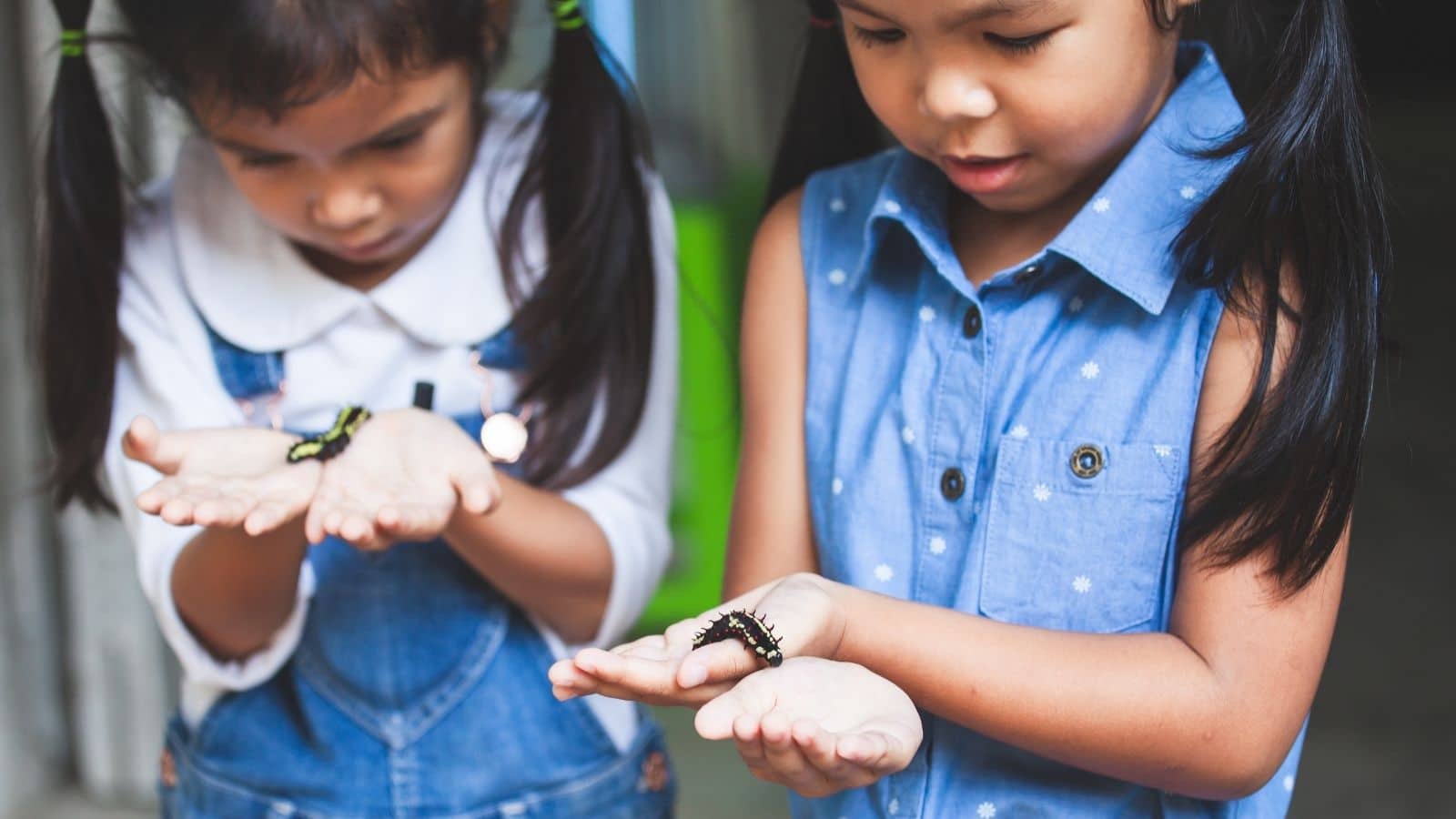
Because here’s the thing—learning is a lifestyle. When you homeschool, learning doesn’t stay contained to a desk between 8 am and 12 pm. It’s the historical marker on the side of the road, the weird insect on the back porch, the algae floating in the shallows that everyone else swims away from while you’re scooping it into a bucket to see what’s living in it.
Sherri told a story about doing exactly that at the beach one day. She scooped up some algae, found a seahorse and a couple of frogfish, and suddenly a crowd of beach kids gathered around her bucket. Her own children started telling the other kids about the animals—what they were, how they worked, and what was fascinating about them. They owned that moment. They didn’t realize how much they knew until they had the chance to share it. That’s what curiosity does. That’s what a childhood soaked in wonder produces.
Faith and Science Aren’t Two Separate Conversations
When you look at creation and see order—patterns, systems, and structure—you’re seeing the fingerprints of a designer. When you see complexity—the intricate machinery of a single-celled organism, the spiral of a fern unfolding, or the architecture of a feather—you’re seeing something that couldn’t have assembled itself randomly. And when you see beauty—a sunset, the proportions of a nautilus shell, the golden ratio showing up in galaxies and Renaissance sculpture—you’re seeing something that has no survival value whatsoever unless it were made by a God who delights in beauty.
“If things happened randomly without a creator,” Sherri said, “beauty wouldn’t be part of that.”
You don’t have to force these conversations. They arise naturally when you’re paying attention to the world together. History is God’s story, language is His gift, and science is His creation on display. The conversations your children need aren’t manufactured—they’re already woven into the ordinary fabric of your homeschool days.
Making Hard Things Make Sense
Sherri has a gift for taking abstract, complex concepts and making them land — and her secret is simple: analogies.
Find something your child already knows and connect it to what they don’t know yet. Chemistry seems intimidating until you explain polar molecules as a tug-of-war between a football player and a three-year-old. Suddenly it clicks.
This is actually why those wide-ranging early childhood experiences matter so much—things like playing on playgrounds, painting, exploring, cooking, and building. They’re not wasting time; they’re filling their reservoir of concrete experiences that will later serve as the hooks on which abstract concepts can hang.
And whenever possible, build a model with food. Sherri’s students built a layered parfait to understand ocean zones. My kids built castles out of cardboard to understand medieval history. The memory is physical, and physical memories stick.
Give Yourself (and Your Kids) Some Grace
Sherri said her biggest mistake was staying in a box that wasn’t hers.
She’s a checklist person. She sees the lesson plan, and she wants to follow it, check it off, and feel done. It took her a while to realize that flexibility wasn’t breaking the rules. Having the freedom to flex meant letting her child take another day on a test, switch chapters because they’re going to the ocean this week anyway, or do the writing assignment orally because her son had dysgraphia.
You know your child—not the curriculum author or the co-op teacher.
Use the guides, lean on a good curriculum, and then make it yours. Tailor it and let it serve your family rather than the other way around.
And as your kids get older, bring them into that conversation. Ask them what would make it easier. Let them own pieces of their own education. Your job isn’t to deliver information; it’s to launch a person who loves learning, asks good questions, and knows how to figure things out when they don’t know the answer.
A Word for the Tired Mom in the Thick of It
“Step back often and reassess. You have done a lot more than you think.”
Sherri mentioned that public school teachers get planning days; built-in time to step back, breathe, and get their bearings. Homeschool moms don’t; they just keep going. It can feel like you’re failing, but you’re not.
Your progress is real, even when it’s invisible. The conversations you’ve had, the questions you’ve explored together, the character moments, and the hard days you pushed through—it all counts.
So, step back, take a breath, and ask God for wisdom for just tomorrow or even the next hour.
It’s hard, but it’s so, so worth it.