




Why Science Might Be the Most Important Subject You Teach
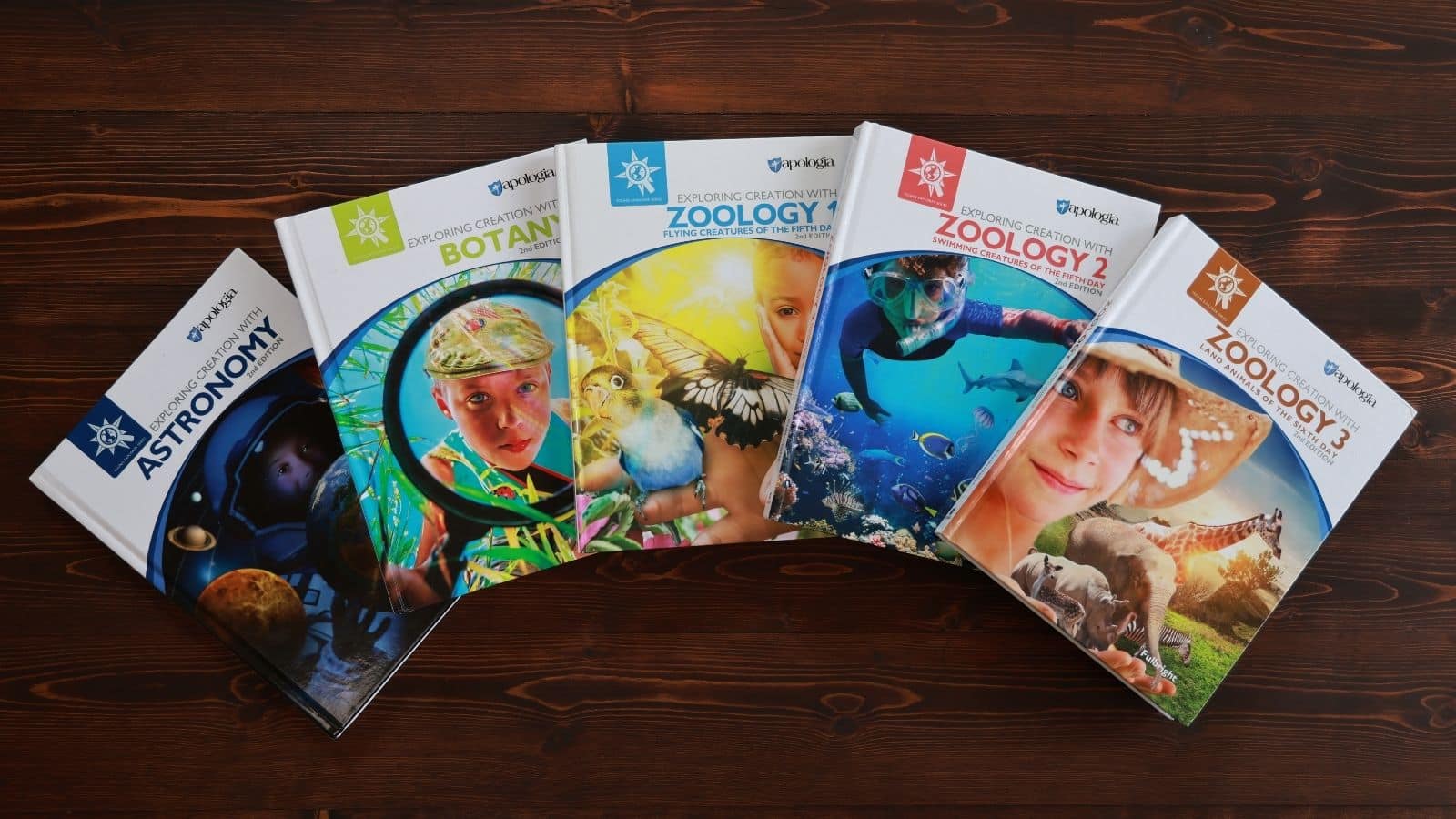
Homeschooling science can feel intimidating — but it doesn’t have to. In a recent conversation on Let’s Talk Homeschool, Jeannie Fulbright, author of the Young Explorer series, dug into what it really looks like to teach science well at home. Spoiler: it’s less about flashy experiments and more about slowing down, diving deep, and learning together.
The Single Best Thing You Can Do
If there’s one thing families can do to raise strong science thinkers, Jeannie says it’s simple: do science together rather than just assigning a chapter and checking a box. Sit down, read, discuss, and wonder alongside your kids.
Traditional schools often treat science as a coverage exercise—move fast, hit the basics, take a test, and move on. But that approach doesn’t build long-term memory or spark genuine curiosity. When parents learn alongside their children (often for the first time!), the conversation that naturally follows is where the real learning happens.
Narration, Observation, and Notebooking: The Method Behind the Magic
Jeannie is a big advocate of the Charlotte Mason teaching philosophy, which leans heavily on three key practices: Narration, Observation, and Notebooking.
Narration is simply asking your child to tell you what they just learned in their own words. It sounds low-tech, but the science behind it is compelling. When a child explains information rather than just hearing it, their brain forms actual physical neural pathways. They’re not just absorbing facts; they’re organizing and processing them. The teacher always learns the most, and narration turns your child into the teacher.
Observation is about slowing down and truly noticing. Whether it’s studying a detailed diagram of the layers of the skin or heading outside to track what’s happening in the night sky, observation trains sustained attention — a skill that doesn’t come naturally in a world of constant digital stimulation. The good news? It can be taught.
Notebooking takes everything a step further by inviting creativity into the learning process. Instead of filling out a worksheet (which research shows does almost nothing for long-term retention), children draw, write, and create in response to what they’ve learned. Science actually shows that creativity and memory are both housed in the same part of the brain—the hippocampus—so combining them is a powerful one-two punch. Jeannie shared a story about texting her 30-year-old daughter a photo of something she’d drawn at age eight. Her daughter remembered it instantly. That’s the power of notebooking.
Science and Faith: They Go Hand in Hand
One of the most unique things about science as a subject is how naturally it points to something bigger. When families dive deep into a topic rather than skimming the surface across a dozen fields, they start to see the incredible complexity and intentionality woven into creation.
The intricacies of the immune system, the mechanics of pollination, and the laws of physics that govern how objects move all reflect a brilliance that’s hard to explain away. Jeannie describes it as building a sense of awe for God, not just knowledge about the world. And that sense of wonder is a gift that science, taught well, is uniquely positioned to give.
Does Diving Deep Sacrifice Academic Rigor?
It’s a fair question: if the goal is depth over breadth, does the academic rigor suffer?
Jeannie’s answer is a clear no, and Charlotte Mason’s philosophy backs it up. Mason called this “divine curiosity,” the idea that children come into the world naturally motivated to learn. Studies have shown that self-directed curiosity actually peaks in early childhood and then drops sharply around age seven — right when most kids have been in school for a couple of years.
The traditional education model, Jeannie explains, was never really designed to produce deep thinkers. It was designed to produce obedient workers who could follow instructions. That’s a sobering thought, but it also means homeschooling families have a real opportunity to do something different.
When a child dives deep into astronomy, chemistry, or anatomy, they come out the other side genuinely confident. It’s not just an “I passed the test” kind of confident, but an “I can have an intelligent conversation with an expert in this field” kind of confident. And that confidence transfers to every other subject they tackle.
Questions Are Your Secret Weapon
Asking good, open-ended questions is one of the most underrated tools in a homeschooling parent’s toolkit. Rather than asking “Is that right or wrong?” try “What was the most interesting thing you learned?” or “How would you explain how the sun gets its energy?”
The word education literally comes from a Latin root meaning “to draw forth.” The goal isn’t to pour information in, but to draw out what’s already developing inside a child’s mind.
The dinner table and the car ride are both great places for this. Kids who’ve spent the day learning about flying fish or the layers of the atmosphere often can’t wait to tell someone what they know. And that enthusiasm is worth more than any quiz score.
Don’t Believe Everything You See Online
For families that feel like they’re falling short because their homeschool days don’t look like what they see on Instagram, Jeannie has some reassuring words: nobody’s does.
What shows up in a photo is one perfectly framed moment in an otherwise wonderfully chaotic day. Real homeschooling is messy. Some days you get through two pages. Some days, one paragraph. That’s normal, and it’s okay.
All of Jeannie’s children graduated from the University of Georgia, some on scholarship, and not a single one of their school days looked “Pinterest-worthy.” The goal isn’t perfection. It’s consistency, grace, and keeping an eye on the long game.
When Things Aren’t Working
Jeannie’s parting advice for families who are struggling is to give yourself permission to take a break. Hiding the grammar book for six weeks and coming back to it refreshed is not failure. Adjusting the schedule, skipping an activity that causes more friction than it’s worth, or simply going outside to play are all valid, healthy homeschool choices.
You were designed to teach your children. They were designed to be taught by you. The path won’t always be smooth, but the legacy of curious, confident kids who love learning is worth every hard day along the way.